statcounter code

Showing posts with label sailing ships. Show all posts

Friday, July 3, 2015

New Article: Bread and Butter Hull Construction

Waste Less Wood than Cutting a Solid Block

Using the Bread-and_Butter Technique for Solid Hull Model Ship Construction

Ship Plans Provide Everything You Need to Scratch-Build a Red Sea Dhow
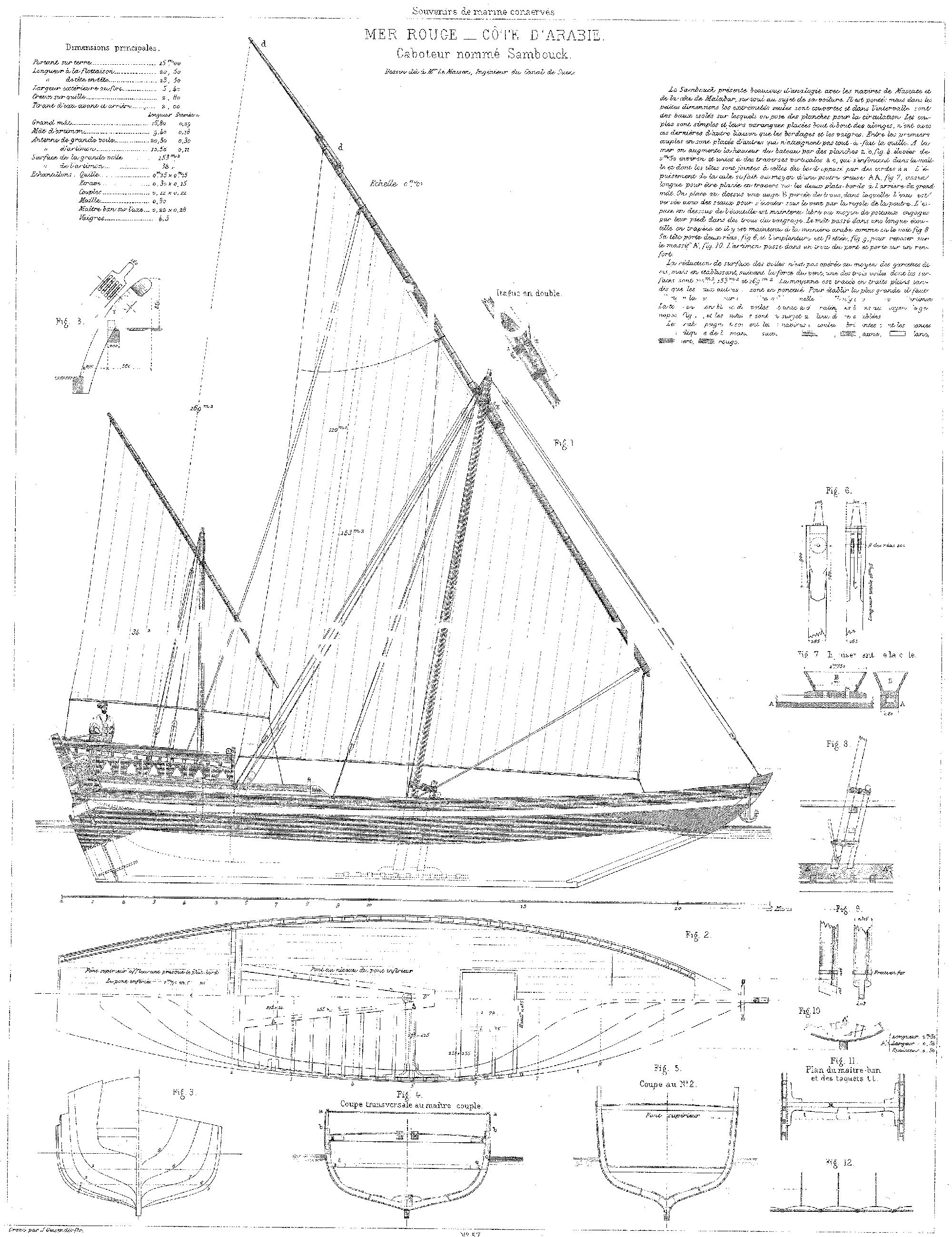
Ship model, Arab, Sambouk, dhow, scratch-building, solid hull, bread-and-butter
Red Sea Dhow
 The most basic form of scratch-built ship modeling is the solid hull technique that we demonstrated on our page Creating a Solid Hull Ship Model. While the method demonstrated there - using a solid block of wood to create the hull for a 19th Century William Doughty-designed revenue cutter - works well for smaller models, a solid block of wood large enough to build a bigger model will be either hard to find, or prohibitively expensive.

In our series Scratch-building a Bread-and-Butter Solid Hull Ship Model we discuss the popular method of scratch-building a solid hull for larger ship models, called the bread-and-butter technique, that reduces the thickness (and expense) of wood needed as compared to the solid block method.

This method uses the waterlines from the ship plan to cut out several planks that will be layered like slices of bread to create the solid hull, and glued together (the butter).

A major advantage of this method - in addition to less cost for wood than a solid block - is that since each plank is cut to the breadth of the hull at a certain level, there is less filing and sanding to reach the final shape than a single block of wood, which must be cut to the widest breadth of the hull.

ad_souvenirs

Sunday, March 29, 2015

More Progress on Midwest Products' Chesapeake Bay Flattie Model Ship Kit

Midwest Products' Chesapeake Bay Flattie

Plank-on-Bulkhead Model Ship Kit

Promises Ease of Construction


plank-on-bulkhead model ship kit Chesapeake Bay Flattie
Midwest Products Chesapeake Bay Flattie kit.
While solid-hull ship models are generally considered the easiest to construct, Midwest Products has created a "Success Series" of ship model kits that offer plank-on-bulkhead models that promise to make model shipbuilding easy for the complete novice.

We decided to test this theory by making Midwest's Chesapeake Bay Flattie ship model kit our first on-line kit build. The simple lines of these boats that made them ideal for locals to build from locally-available lumber should also make this an ideal ship model kit or a person with no prior wood ship model building experience.

The biggest challenge of plank-on-bulkhead ship models is planking the hull, and because of the simple shape of these boats, this task is accomplished in this kit with a single plank on each of the sides, and two planks on the bottom.

The kit comes with well-executed die-cut and pre-cut parts, as well as fittings, rigging line, sail material, and a well-done set of instructions and building plans.

Click on the links below to visit each stage of construction:
Chesapeake Bay Flattie Kit: Introduction
Chesapeake Bay Flattie Kit: Chapter 1, Keel and Bulkhead assembly
Chesapeake Bay Flattie Kit: Chapter 2, Deck Assembly
Chesapeake Bay Flattie Kit: Chapter 3, Mast Steps and Bow Stiffeners
Chesapeake Bay Flattie Kit:Chapter 4: Keel and Chine Strips
Chesapeake Bay Flattie Kit:Chapter 5: Installing the Cabin
Chesapeake Bay Flattie Kit:Chapter 6: Planking the Hull
We have a lot more steps ahead of us, so keep checking back for updates!

ad_souvenirs

Monday, March 23, 2015

Free Ship Plans Brigantine Schooner Carlo

Free Ship Plans of Brigantine Schooner Carlo

Italian Cargo Vessel Built 1909

free ship plans,  brigantine, schooner, Italian, wooden, vessel, sail
Brigantine Schooner Carlo

Built at the end of the age of sail, and the dawn of the 20th Century, our Free Ship Plans of the Brigantine Schooner Carlo demonstrate the pinnacle of sail design as naval architects attempted to use modern hull designs and materials with simplified rigs that needed fewer sailors to handle.
Even though the Age of Steam was upon them, many of these last sailing ships earned a living well into the first half of the 20th century. ad_souvenirs

Saturday, June 21, 2014

Free Ship Plans of Italaian Brigantine Schooner Gigino

Italian Brigantine Schooner Gigino

Demonstrates Pinnacle of Sailing Ship Design

What Chapelle would term "Hermaphrodite Brig"


free ship plans, sailing, vessels, brigantine, schooner, Italian 20th century, Gigino
20th Century Italian Brigantine Schooner Gigino
As steam powered ships threatened to finally replace sail for ocean-going cargo vessels, this pressure led naval architects to the pinnacle of their design skills. The final sailing ships balanced capacity with fine lines that allowed greater speed while carrying the maximum amount of cargo.

Another major design change was the change from square sail rigs to fore-and-aft sails. These schooner rigs required fewer sailors to handle the ropes, allowing sailing ships to remain financially competitive with the smaller crews of steam ships. The "brigantine schooner" - or "hermaphrodite brig," as American historian Howard I. Chapelle would name it - combined the two sail rigs with square sails on the forward mast and fore-and-aft sails on the main mast, giving it positive benefits of both sail types. These sailing ships remained competitive with steamships well into the 20th Century.

Our free ship plans of Italian brigantine Gigino offer a large body plan with ships' curves, as well as a detailed framing plan, section plan, keel and deadwood plan, and sail and rigging plan.

ad_souvenirs

Thursday, June 12, 2014

Building Midwest Products' Chesapeake Bay Flattie Ship Model Kit

Chesapeake Bay Flattie Ship Model Kit Project Moves Ahead
Skeleton of Midwest Products Kit Takes Shape
Entry-level Kit is Great Place to Start Ship Model Building
ship model building, Chesapeake Bay Flattie, Midwest Products
Adding Chine Strips to the Chesapeake Bay Flattie
Next up in our construction of the Midwest Products Chesapeake Bay Flattie ship model kit is to create a supporting surface for the bottom and side planks by adding keel and chine strips.

The keel strips lie along the keel to keep the bottom planking from sagging between the bulkheads.

The chine strips run along the edge where the bottom and sides of the boat meet. The Chesapeake Bay Flattie is considered a "hard chine" boat due to the acute angle at which the side and bottom planking meets. The chine "logs" on a boat like this provide strength to the hull as well.

Click on the links below to visit each previous stage of construction:
Chesapeake Bay Flattie Kit: Introduction
Chesapeake Bay Flattie Kit: Chapter 1, Keel and Bulkhead assembly
Chesapeake Bay Flattie Kit: Chapter 2, Deck Assembly
Chesapeake Bay Flattie Kit: Chapter 3, Mast Steps and Bow Stiffeners

Wednesday, November 20, 2013

Free Ship Plans of R-boat Pirate

Award-winning R-class Sloop Pirate


Now Best Existing Example of its Type


Pinnacle of West Coast Yacht Design


free ship plans, r-class, sloop, pirate, sailing, yacht
R-class Sloop Pirate
For a change of pace from our ship plans, we've put up construction drawings for the R-class sloop Pirate.

Presently owned by The Center for Wooden Boats, R-boat Pirate is the best existing example of the R-class yachts.

Constructed in 1926 by Lake Union Dry Dock of Seattle, Washington, from plans by L.E. “Ted” Geary, Pirate embodies the pinnacle of yacht design and construction in the Seattle area in the early 20th century.

Saturday, November 16, 2013

Free Ship Plans of Italian Barque Erasmo

Early 20th Century Sailing Ship Erasmo


Demonstrates Pinnacle of sailing design


With Steel Hull and Four-masted Barque Rigging


Built in Genoa, Italy in 1903, the four-masted, steel-hulled barque Erasmo (Erasmus) sailed from Europe to Australia and to America.
We have massive downloadable ship plans of her as well as quite a bit of info on our page about her.
By the end of the 18th Century, the term ‘barque’ referred to a specific sail plan of three or more masts with fore-aft sails on the aft-most mast and square sails on the others. Barques could nearly match the speed of ship-rigged clippers, and surpassed the performance of schooners and barkentines. They could operate with smaller crews than a full-rigged ship as well, making them more economical to operate.
ad_souvenirs

Tuesday, August 13, 2013

New book on work of François-Edmond Pâris

Selected Plates from Souvenirs de Marine


Souvenirs de Marine François-Edmond Pâris, French, navy, admiral, Francois-Edmund Paris, ship plans
New book available soon!
Update: Our book on the work of François-Edmond Pâris, "Selected Plates from Souvenirs de Marine" is now available! Our book contains more than 90 plates from Souvenirs de marine. Collection de plans ou dessins de navires et de bateaux anciens ou modernes existants ou disparus avec les éléments numériques nécessaores à leur construction.

More than 130 ship plans are included ranging from ancient vessels to late 19th Century. There are warships, merchant vessels, fishing vessels, and small craft from Europe, Asia, Africa, and the U.S. The plates are indexed by plate number, illustrated vessel type, named vessel, and by country/region.

The book also includes an appendix "How to Read a Ship Plan" to help the novice understand the lines used to illustrate in two dimensions the shape of a three-dimensional ship.

The book is available now on Kindle and should be available on Amazon sites worldwide within a week.

Wednesday, April 3, 2013

Free Plans of Historic Lumber Schooner Wawona

A Subject for a Historic Ship Model


Wawona one of only two lumber schooners still preserved


Free plans of the West Coast lumber schooner Wawona for a scratch-built ship model
Lumber Schooner Wawona
Scores of wooden three-masted schooners once plied the Pacific Ocean off the U.S. West Coast, bringing lumber from the Pacific Northwest to the growing cities of California. Two of them are all that remain of this vast fleet. Built in the 1897 for Dolbeer & Carson Lumber Company of Eureka, California,   the schooner Wawona is one of the two known to be preserved. She and the other surviving lumber schooner, C.A. Thayer (National Maritime Museum, San Francisco), were built by Hans D. Bendixsen, who was well known in his time for the superior construction of his vessels.

Able to transport more than 500,000 board feet of lumber per voyage, like most ships in her day, Wawona’s hull was lofted from a carved wooden half model rather than a detailed set of engineering drawings. The free ships plans offered here are from a 1986 survey in preparation for a $2 million restoration.

Friday, February 15, 2013

Free Ship Plan: Algerian Xebec Two-fer

The xebec was the preferred ship of North Africa's Barbary corsairs, but the vessel type was also used by the main Mediterranean sea powers
Xebec with lateen sails

Not much put more fear in the heart of a Mediterranean seafarer than the triangular sails of a Barbary corsair appearing on the horizon.
The favorite vessel of these North African pirates was the xebec, a long, narrow ship descended from the rowed galleys of the ancient world. Able to sail close to the wind with its lateen sails - or to use oars if the wind failed - and able to navigate shoal waters due to its shallow draft, the xebec was the perfect ship for a pirate. It could catch most merchant vessels, and run away from warships that could reduce its lightly-built hull to splinters with a single broadside.
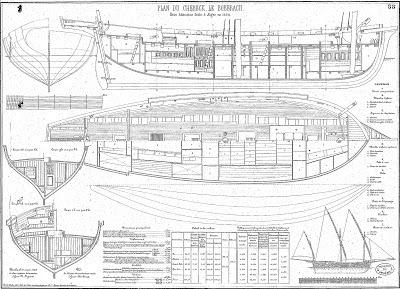
We found in the French Ministry of Defense archives a highly-detailed plan of the Algerian xebec captured in 1830 and placed in service by the French Navy as Le Boberach. She was used mainly as a dispatch ship, where she had a well-documented, albeit fairly uneventful career.
Algerian xebec Le Boberach, captured by the French, is typical of the ships used by the Mediterranean's Barbary corsair pirates
Algerian xebec Le Boberach, captured by the French in 1830
Lack of exciting engagements aside, she still has the exotic lines that would make an eye-catching model for the enterprising modelshipwright looking for something beyond the typical bathtub-hulled square rigger. Thanks to the French proclivity for record keeping, we also have a great deal of information about her service, too.
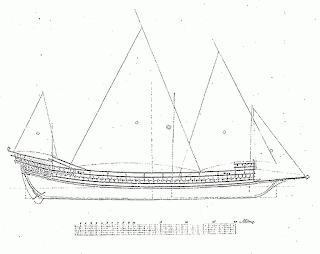
As an extra treat, we threw in the plans of an 18th Century Algerian xebec documented in Fredrik Henrik af Chapman’s Architectura Navalis Mercatoria.


Sunday, February 3, 2013

Free Ship Plan: French Warship Montebello

free, ship, plan, French, ship, warship, Montebello
French warship Montebello in 1850
Launched in 1812, Montebello was an Océan type ship of the line of the French Navy. Plans list her as a 120-gun ship, but many historical references refer to her as a 118-gun ship. She had an impressive 77-year career in the French navy. 

We have a massive collection of 10 high resolution plans of Montebello on our website, including lines, inboard and outboard profile, deck, rigging, mast, and sail plans. We even have accommodations plans showing how stores were shipped aboard this historic warship.

For the model shipwright looking for a massive project, the French ship-of-the-line Montebello may be just what you are looking for.

Saturday, February 2, 2013

Free Ship Plan: Ancient Galley

Due to the popularity of our free ship plan pages for the Ancient Trireme and the Gokstad Viking Longship, we've added a new oar-powered vessel plan.

free, ship, plan, ancient, galley, oar-powered, oars, sailing, wooden, vessel
Free Ship Plan of an Ancient Galley
This Ancient Galley plan is from the Atlas du Génie Maritime in the archives of the French Le Ministère de la Défense. This atlas of ship plans was created in the 19th Century, and features both contemporary and ancient ships.

My guess is this galley is not truly ancient, but probably no older than the Medieval period. I haven't translated most the plan, so it may have info on it to pin down its provenance. I did get as far as the title, which roughly translates to an "Ancient Galley of 36 Banks of Oars, Five Rowers per Bank."

With its three lateen sails and sides bristling with oars, this ship offers a chance for the model shipwright to screatch-build a unique ship model that would truly be an impressive display.

Thursday, January 31, 2013

Free Ship Plan: Lettie G. Howard


free, ship, plan, schooner, lettie g. howard, themodelshipwright.com
Lettie G. Howard  under sail, photo by Nelson Micheal Chin

free, ship, plan, fishing, schooner, lettie g. howard, fredonia
Lettie G. Howard sail plan
The last existing clipper-bowed inshore Fredonia model fishing schooner,  Lettie G. Howard was surveyed in 1989 for the Historic American Engineering Record (HAER), which documents historically significant engineering, industrial, and maritime works in the U.S. The project is administered by the National Park Service, U.S. Department of the Interior. The drawings and photos from that survey are maintained by the Library of Congress, and we offer them at TheModelShipwright.com:
Lettie G. Howard Plan Page
Lettie G. Howard Photo Gallery


Monday, January 28, 2013

Free Ship Plan: Gokstad Viking Longboat

viking, longship, gokstad, long, ship, plan, drawing, free, Norway
Plan of Gokstad Viking Longship from Ancient and Modern Ships

For generations, the sight of a Viking longship sail on the horizon sent chills of fear down the spines of Medieval Europeans. However, Viking longships were used by Scandinavian mariners for everything from commerce to exploration in addition to warfare. Vikings used them to discover new lands to settle in Iceland and Greenland, and it appears they reached the shores of North America hundreds of years before Christopher Columbus.

Our Viking longship plan comes from Ancient and Modern Ships by Sir George Charles Vincent Holmes, published in 1906. Holmes Took from Transactions of the Institution of Naval Architects, Vol. xxii, from a paper by noted naval architect Colin Archer. This particular smaller Viking longship was discovered in 1880 in a grave at Gokstad near Sandefjord at the entrance of the Fjord of Christiana. Built entirely of oak, she was 77 ft. 11 inches in length, extreme breadth 16 ft. 7 inches, depth from top of keel to gunwale 5 ft 9 inches.


Wednesday, January 9, 2013

Free Ship Plan: New York Pilot Schooner

Free, New York, pilot, schooner, ship, lines, plan, drawing, sailing, vessel
New York Pilot Schooner lines plan from Desmond's Wooden Ship Building
This New York Pilot Schooner is another plan from Desmond's Wooden Ship Building. These boats share a lot in common with the Baltimore Clipper Schooner in hull shape. Especially in the "drag" of the keel: The ship sits much deeper at the stern than at the bow. One way in which they differ from their ancestor is the bow is much more plumb. Baltimore Clippers tended to have the outward curving bow of a cutter.

This would work up into a nice ship model. Because of the fairly small size of the prototype New York Pilot Boats, model ships can be built to a fairly large scale without resulting in a model too big for display in the average home.

The fore-aft rig of the schooner also simplifies the task of rigging this model ship, but still provides a very salty-looking result. Scratch-building a model of this ship is a good way to develop model shipbuilding skills needed for a larger project, such as a tea clipper of ship of the line, and allows the model builder to see results much more quickly.

Monday, December 24, 2012

Free Ship Plan: 77-foot North River Schooner

Another interesting free ship plan from Wooden Ship Building by Charles Desmond is the North River Schooner.  The plans are a little rough, as the pages are yellowed and the ink faded, but the missing bulwark lines can be recreated using a coffee stir as a batten. Hold it on edge and bend it to match the existing lines on either side of the missing portion. The wood will give you an accurate curve to trace with a pencil to fill in where the lines are too faint to see.
free ship plan, sail, schooner, New England, Hudson River, North River, vessel
Sail Plan for a 77 foot North River Schooner
free ship plan,section, waterline, sheer, lines, schooner, New England, Hudson River, North River, vessel
Section, Sheer, and Waterline Plans of North River Schooner

This 77-footer is typical of the shoal draft centerboard sailboats used on the Hudson River to haul bulk cargo in the  19th Century. When it was extended, the centerboard acted as a keel, giving the boat stability when tacking to windward, keeping it from "crabbing" - moving sideways rather than forward. When retracted, it allowed the boat to get into shallow waters common along the river, or even be beached for unloading where a harbor wharf wasn't available.

From The Sloops of the Hudson, by By William E. Verplanck and Moses W. Collyer (The Knickerbocker Press 1908):


 The North River schooner was built on somewhat the same plan as the sloop, having a center board, and her bowsprit carried out almost horizontal, and one head-sail, the single jib, attached to a jib-boom, as with the sloop.* (A few of the later schooners carried a flying-jib.---W.E.V.)  She carried not foretopmast. The skippers contented themselves with a maintopsail only and set it like the sloop’s. The foresail was of good size compared with the mainsail and not a mere “ribbon” such as the racing schooner yacht now carries.  The quarter-deck was replaced in the later schooners by a trunk cabin, lighted from the side and end, affording smaller and less pleasant accommodations than those below the quarter-decks of the old packet sloops with their large windows for light and air at the stern.

The schooners were not as good in windward work as the sloop, but with a fair or beam wind they were faster.  The rig, however, soon commended itself for the sloop with her long boom, tall mast, and heavy mainsail was difficult to handle at all times and especially in a blow and required a crew of six men to the schooner’s four. The first of the schooners were converted sloops. From which many of the larger ones were changes to save expense of operation. Late, about 1865 there was built  a new type of schooner for the Hudson which though rigged the same was a wider and shallower boat thus giving her greater carrying capacity and permitting all the cargo to be placed on deck for expedition in loading and unloading. She was quite sharp forward, which—with other good points in her model—made her good sailer.


Saturday, December 8, 2012

New Illustrations on the Shipbuilding Terms Pages

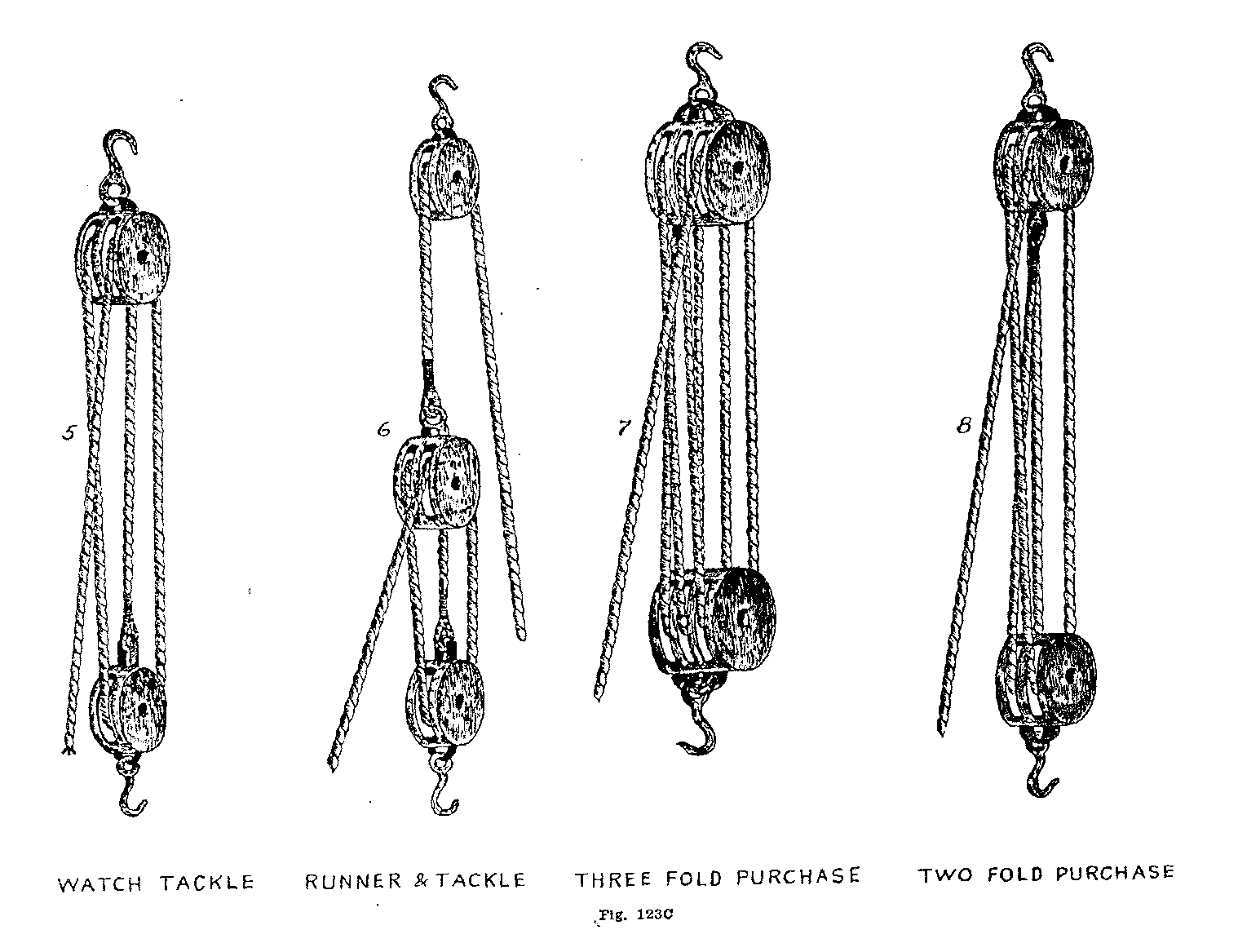
We've added some great illustrations of blocks and tackle from Wooden Ship Building by Charles Desmond to the Shipbuilding Terms pages:
sheave, block, tackle, ship, rigging, purchase, shipbuilding, ship building, terms
Types of Sheaves and Blocks Illustration from Wooden Ship Building by Charles Desmond
sheave, block, tackle, ship, rigging, purchase, shipbuilding, ship building, terms
Types of Tackle Illustration from Wooden Ship Building by Charles Desmond


sheave, block, tackle, ship, rigging, purchase, shipbuilding, ship building, terms
Types of Tackle Illustration from Wooden Ship Building by Charles Desmond

Wednesday, December 5, 2012

Free Ship Plan 19th Century Steam Fishing Trawler


Free ship plan, steam-powered, fishing, trawler, W.E. Redway, Canada, Great Lakes
Steam-powered 19th Century fishing trawler designed by W.E. Redway
These plans, from the University of Washington Freshwater and Marine Image Bank, are of a late 19th Century steam-powered auxiliary fishing trawler of about 80 feet in length, designed by W.E. Redway.

Free ship plan, steam-powered, fishing, trawler, W.E. Redway, Canada, Great Lakes, deck plan
Deck and inboard profile view of 19th Century Great Lakes
steam-powered fishing trawler designed by W.E. Redway
W. E. Redway was a Great Lakes shipbuilder in the late 1800s. 

Born in England, his father was also a shipbuilder. Redway served an apprenticeship in the Chatam dock yard in England, followed by positions in various shipyards "on the northeast coast of England and on the (River) Clyde," according to an 1897 profile in The Globe newspaper in Toronto. The River Clyde, flowing through Scotland's industrial city of Glasgow, was a major shipbuilding center during the Industrial Revolution.

Redway moved to Toronto, Canada in 1886.

Free ship plan, body, sheer, waterline, plan, 19th Century, Great Lakes, Canada, steam-powered, fishing, trawler
Body, Sheer, and waterline plans of 19th Century Great Lakes
steam-powered fishing trawler designed by W.E. Redway
According to The Globe newspaper profile, Redway "up to June 1897, planned and constructed eleven steam vessels. These were the Imperial, the Mayflower, the Primrose, the Garden City, the Mascotte, the Mistassini, the Medora and others. He also framed the Gooderham yachts Cleopatra and Oriole. Hearing of some of his good work, the managers of the Union shipyards at Buffalo sent for Mr. Redway, and he was there second in charge of the building of the steamer Ramapo, being occupied for six months of the year of 1895 at that work."

Tuesday, December 4, 2012

Our Favorite Model Shipbuilding Book

One of the best all-around ship model building books for those contemplating building from scratch, Charles G. Davis' The Shipmodel Builder's Assistant also has tons of useful info ship model kit builders can use to improve their result.