

How To Build First-Class Model Ships From Kits or From Ship Plans
statcounter code

Monday, June 22, 2020

Friday, July 3, 2015
New Article: Bread and Butter Hull Construction
Waste Less Wood than Cutting a Solid Block
Using the Bread-and_Butter Technique for Solid Hull Model Ship Construction
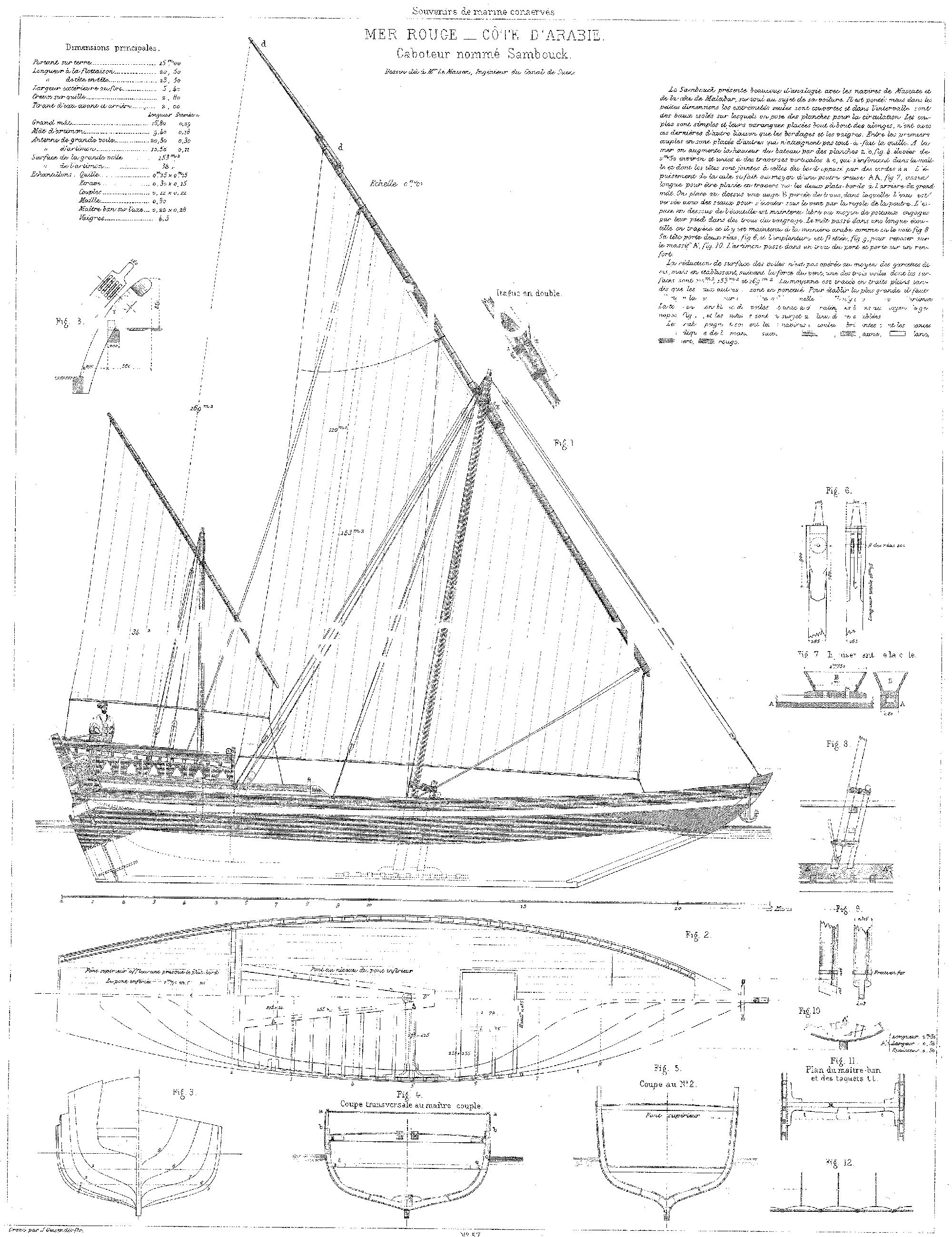
Ship Plans Provide Everything You Need to Scratch-Build a Red Sea Dhow
 |
| Red Sea Dhow |
In our series Scratch-building a Bread-and-Butter Solid Hull Ship Model we discuss the popular method of scratch-building a solid hull for larger ship models, called the bread-and-butter technique, that reduces the thickness (and expense) of wood needed as compared to the solid block method.
This method uses the waterlines from the ship plan to cut out several planks that will be layered like slices of bread to create the solid hull, and glued together (the butter).
A major advantage of this method - in addition to less cost for wood than a solid block - is that since each plank is cut to the breadth of the hull at a certain level, there is less filing and sanding to reach the final shape than a single block of wood, which must be cut to the widest breadth of the hull.

Friday, April 3, 2015
Free Ship Plans U.S.S. Bolster
Salvage Vessel U.S.S. Bolster
The Last Remaining World War II Era Auxiliary Ship of Her Class
Ocean-going Tug Served 49 years in the U.S. Navy
 |
| U.S.S. Bolster sister ship Opportune (ARS-41), circa 1945 |
Built by Basalt Rock Company, Napa, California, U.S.S. Bolster's keel was laid on 20 July 1944. She was launched 23 December 1944 and commissioned 1 May 1945. Presently owned by the U.S. Maritime Administration, U.S.S. Bolster is a member of the inactive National Defense Reserve Fleet.
Our Free Ship Plans of U.S.S. Bolster include profile, deck, section, lines, and detail plans.
Sunday, March 29, 2015
More Progress on Midwest Products' Chesapeake Bay Flattie Model Ship Kit
Midwest Products' Chesapeake Bay Flattie
Plank-on-Bulkhead Model Ship Kit
Promises Ease of Construction
 |
| Midwest Products Chesapeake Bay Flattie kit. |
We decided to test this theory by making Midwest's Chesapeake Bay Flattie ship model kit our first on-line kit build. The simple lines of these boats that made them ideal for locals to build from locally-available lumber should also make this an ideal ship model kit or a person with no prior wood ship model building experience.
The biggest challenge of plank-on-bulkhead ship models is planking the hull, and because of the simple shape of these boats, this task is accomplished in this kit with a single plank on each of the sides, and two planks on the bottom.
The kit comes with well-executed die-cut and pre-cut parts, as well as fittings, rigging line, sail material, and a well-done set of instructions and building plans.
Click on the links below to visit each stage of construction:
Chesapeake Bay Flattie Kit: Introduction
Chesapeake Bay Flattie Kit: Chapter 1, Keel and Bulkhead assembly
Chesapeake Bay Flattie Kit: Chapter 2, Deck Assembly
Chesapeake Bay Flattie Kit: Chapter 3, Mast Steps and Bow Stiffeners
Chesapeake Bay Flattie Kit:Chapter 4: Keel and Chine Strips
Chesapeake Bay Flattie Kit:Chapter 5: Installing the Cabin
Chesapeake Bay Flattie Kit:Chapter 6: Planking the Hull
We have a lot more steps ahead of us, so keep checking back for updates!
Friday, March 27, 2015
Scarf Joints for Model Ship Builders
Technique for Joining Timbers Important in Shipbuilding
Scarf Joints Create Ship-length Timbers from Shorter Lengths
An Important Technique for Ship Model Builders, Too

In these cases, several pieces are joined together lengthwise by "scarfing": tapering the ends, lapping them and then fastening the two together.
An illustration from Charles G. Davis's The Building of a Wooden Ship shows the details of creating different types of scarf joints, which are useful to the model shipbuilder as well.
Often, the model shipbuilder must join several pieces of wood around a curve to make sure the wood grain is aligned to its strongest direction at each point of the piece.
Some examples of this include the stem, which curves through the gripe to join the keel; log rails that curve around the bow or stern, or transom pieces with complex curves.
Scarf joints are the strongest way to join these different pieces to ensure a joint that will not fail.
Our page Scarf Joints gives Davis's rules of thumb for creating strong scarph joints.

Monday, March 23, 2015
Free Ship Plans Brigantine Schooner Carlo
Free Ship Plans of Brigantine Schooner Carlo
Italian Cargo Vessel Built 1909
 |
| Brigantine Schooner Carlo |
Built at the end of the age of sail, and the dawn of the 20th Century, our Free Ship Plans of the Brigantine Schooner Carlo demonstrate the pinnacle of sail design as naval architects attempted to use modern hull designs and materials with simplified rigs that needed fewer sailors to handle.
Even though the Age of Steam was upon them, many of these last sailing ships earned a living well into the first half of the 20th century.
Friday, November 14, 2014
Glossary of Shipbuilding Terms Explains the Jargon
It's Important for Model Shipbuilders to Understand
The Language of Shipbuilding
Glossary of Shipbuilding Terms Explains the Arcane

Our Glossary of Shipbuilding Terms comes from Charles G. Davis's The Building of a Wooden Ship (1917) which was written to familiarize carpenters and cabinetmakers with the art of shipbuilding.
We've added illustrations from a number of period sources and comments to help with comprehension of these terms, many of which have few, if any, modern equivalents.
Tuesday, July 15, 2014
Free Ship Plans of US Navy Cargo Vessel USNS Comet
U.S.N.S. Comet First Roll-on/Roll-off Cargo Vessel of Her Kind
C-3 Cargo Ship Had Stern Loading Ramp Allowing Vehicles to Load Under Their Own Power
FIRST DEEP-DRAFT OCEAN GOING CARGO VESSEL TO OFFER SELF-LOADING
 |
| C-3 Cargo Ship U.S.N.S. Comet |
U.S.N.S Comet was designed by the U.S. Navy Bureau of Ships and the Maritime Administration to carry fully-loaded self-propelled wheeled or tracked vehicles, and able to load and unload them through a ramp in her stern and four side loading ports. A series of internal ramps allowed the vehicles to be moved under their own power or towed into the holds.
Our U.S.N.S. Comet free ship plans page offers seven sheets of high-resolution downloadable plans perfect for the ship model builder looking for a challenging scratch-building project.
Saturday, June 21, 2014
Free Ship Plans of Italaian Brigantine Schooner Gigino
Italian Brigantine Schooner Gigino
Demonstrates Pinnacle of Sailing Ship Design
What Chapelle would term "Hermaphrodite Brig"
 |
| 20th Century Italian Brigantine Schooner Gigino |
Another major design change was the change from square sail rigs to fore-and-aft sails. These schooner rigs required fewer sailors to handle the ropes, allowing sailing ships to remain financially competitive with the smaller crews of steam ships. The "brigantine schooner" - or "hermaphrodite brig," as American historian Howard I. Chapelle would name it - combined the two sail rigs with square sails on the forward mast and fore-and-aft sails on the main mast, giving it positive benefits of both sail types. These sailing ships remained competitive with steamships well into the 20th Century.
Our free ship plans of Italian brigantine Gigino offer a large body plan with ships' curves, as well as a detailed framing plan, section plan, keel and deadwood plan, and sail and rigging plan.
Thursday, June 12, 2014
Building Midwest Products' Chesapeake Bay Flattie Ship Model Kit
Chesapeake Bay Flattie Ship Model Kit Project Moves Ahead
Skeleton of Midwest Products Kit Takes Shape
Entry-level Kit is Great Place to Start Ship Model Building
Next up in our construction of the Midwest Products Chesapeake Bay Flattie ship model kit is to create a supporting surface for the bottom and side planks by adding keel and chine strips.
The keel strips lie along the keel to keep the bottom planking from sagging between the bulkheads.
The chine strips run along the edge where the bottom and sides of the boat meet. The Chesapeake Bay Flattie is considered a "hard chine" boat due to the acute angle at which the side and bottom planking meets. The chine "logs" on a boat like this provide strength to the hull as well.
Click on the links below to visit each previous stage of construction:
Chesapeake Bay Flattie Kit: Introduction
Chesapeake Bay Flattie Kit: Chapter 1, Keel and Bulkhead assembly
Chesapeake Bay Flattie Kit: Chapter 2, Deck Assembly
Chesapeake Bay Flattie Kit: Chapter 3, Mast Steps and Bow Stiffeners
Skeleton of Midwest Products Kit Takes Shape
Entry-level Kit is Great Place to Start Ship Model Building
 |
| Adding Chine Strips to the Chesapeake Bay Flattie |
The keel strips lie along the keel to keep the bottom planking from sagging between the bulkheads.
The chine strips run along the edge where the bottom and sides of the boat meet. The Chesapeake Bay Flattie is considered a "hard chine" boat due to the acute angle at which the side and bottom planking meets. The chine "logs" on a boat like this provide strength to the hull as well.
Click on the links below to visit each previous stage of construction:
Chesapeake Bay Flattie Kit: Introduction
Chesapeake Bay Flattie Kit: Chapter 1, Keel and Bulkhead assembly
Chesapeake Bay Flattie Kit: Chapter 2, Deck Assembly
Chesapeake Bay Flattie Kit: Chapter 3, Mast Steps and Bow Stiffeners
Tuesday, May 13, 2014
Free Ship Plans of Fletcher-class World War II Destroyer USS Capps
Fletcher-class Destroyer U.S.S. Capps
Saw World War II Service in Atlantic and Pacific Theaters
Then Went on to Long Career in Spanish Navy as Lepanto
.jpg "Fletcher-class destroyer USS Capps during Spanish Navy service as Lepanto") |
| Fletcher-class destroyer USS Caps during service for Spain as Lepanto |
A member of the Fletcher class, the largest class of destroyers built during World War II, she served in a number of operations in both the Atlantic and Pacific theaters of operation during World War II including raids on German ports, escort duty, and the battles of Iwo Jima and Okinawa.
After being decommissioned by the U.S. Navy, she was transferred to the Spanish Navy, where she served until 1985 as Lepanto.
Our USS Capps Plans Page features plans of each of her decks, inboard and outboard profiles, sections, and body plans perfect for model ship construction.
Tuesday, March 25, 2014
Free Ship Plans USCG Cutter Acushnet Former USS Shackle
U.S. Coast Guard Cutter Acushnet serves 67 year career
That began as U.S. Navy salvage vessel USS Shackle
Decommissioned in 2011, she was the only World War II vintage vessel still in Coast Guard service
 |
| USCG Cutter Acushnet/USS Shackle |
With the attack on Pearl Harbor, navy shipyards were suddenly hard-pressed to build all the new vessels that would be required for the war effort. The U.S. Navy turned to the U.S. Maritime Commission to contract many of the attack transports, oilers, and other auxiliary ships it needed, such as salvage ships.
 |
| Outboard profile USCG Cutter Acushnet |
U.S.C.G. cutter Acushnet/U.S.S. Shackle has great lines and would make for a great ship model, built from the free ship plans available at TheModelShipwright.com
Wednesday, January 22, 2014
Steam Tug Hercules Photo Gallery
High-resolution Photo Gallery of Steam Tug Hercules
The Only Remaining Steam Tug on the West Coast
A great subject for a historic ship model
 |
| Steam Tug Hercules |
The only remaining ocean-going steam tug on the West Coast, Hercules was designated a National Historic Landmark in 1986. She was was documented as part of the Historic American Engineering Record, a program of the National Park Service.
Our photo gallery of steam tug Hercules features high-resolution photographs from that survey that are kept by the Library of Congress.
Also, check out our Free Ship Plans of Steam Tug Hercules.
Monday, January 20, 2014
Building Midwest Products' Chesapeake Bay Flattie Model Ship Kit
Midwest Products' Chesapeake Bay Flattie
Plank-on-Bulkhead Model Ship Kit
Promises Ease of Construction
|
| Midwest Products Chesapeake Bay Flattie kit. |
We decided to test this theory by making Midwest's Chesapeake Bay Flattie ship model kit our first on-line kit build. The simple lines of these boats that made them ideal for locals to build from locally-available lumber should also make this an ideal ship model kit or a person with no prior wood ship model building experience.
The biggest challenge of plank-on-bulkhead ship models is planking the hull, and because of the simple shape of these boats, this task is accomplished in this kit with a single plank on each of the sides, and two planks on the bottom.
The kit comes with well-executed die-cut and pre-cut parts, as well as fittings, rigging line, sail material, and a well-done set of instructions and building plans.
Click on the links below to visit each stage of construction:
Chesapeake Bay Flattie Kit: Introduction
Chesapeake Bay Flattie Kit: Chapter 1, Keel and Bulkhead assembly
Chesapeake Bay Flattie Kit: Chapter 2, Deck Assembly
Chesapeake Bay Flattie Kit: Chapter 3, Mast Steps and Bow Stiffeners
We have a lot more steps ahead of us, so keep checking back for updates!
Tuesday, December 17, 2013
Plates from Pâris Souvenirs de Marine Perfect Holiday Gift
Souvenirs de Marine by François-Edmond Pâris
One of Most Sought-after Source Books for Model Ship Builders and maritime history enthusiasts alike
Selected Plates from Souvenirs de Marine brings together 130 ship plans from Pâris's historic work.
 |
| Selected Plates from Souvenirs de Marine |
Ship model builders and maritime history enthusiasts alike are constantly on the lookout for copies of his books, which can range into the thousands of dollars for vintage editions.
However, we have brought together Selected plates from Souvenirs de Marine, plates from "Souvenirs de Marine. Collection de plans ou dessins de navires et de bateaux anciens ou modernes existants ou disparus avec les éléments numériques nécessaores à leur construction" (A Record of Navy: Collection of plans or drawings of vessels and of boats ancient or modern, existing or disappeared, with the numerical elements necessary for their construction.) for just $9.99 on Amazon.
Our edition features more than 90 plates from the first two volumes of this set, and feature more than 130 ship plans from vessels ranging from ancient triremes to late 19th Century warships. Vessels from across Europe, the Middle East, Asia, and the U.S. are included. The plates are indexed by plate number, type of vessel, name of vessel, and the country region of the vessel.
We've also included a biography of Vice-Admiral François-Edmond Pâris and a bibliography of his works, and an article "How to Read a Ship Plan" that explains how the lines on a two-dimensional plan picture the shape of a three-dimensional ship.
Selected Plates from Souvenirs de Marine is a sure hit with the model ship builder or maritime history enthusiast on your holiday gift list!
Wednesday, December 11, 2013
Free Ship Plans of French Cargo Vessel Golo
 |
| 1933 French cargo vessel Golo |
Check out our page featuring 15 highly-detailed free ship plans of Golo.
Thursday, December 5, 2013
Free Ship Plans of Spanish Mine-laying Vessel
Spanish Navy Mine-laying Boat also Transported Torpedoes
Spanish name “Barcaza para Embarque y Fondeo de Minas y Transporte de Torpedoes”
Translates to “Barge for Shipment and Anchoring of Mines and Transport of Torpedoes”
 |
| Spanish Navy Mine-layer |
The smaller size of this boat would make it suitable for a larger scale ship model. The hard-chine hull would make scratch-building a model easier as well.
Check out the free ship plans for the Spanish navy mine-layer at TheModelShipwright.com
Wednesday, November 20, 2013
Free Ship Plans of R-boat Pirate
Award-winning R-class Sloop Pirate
Now Best Existing Example of its Type
Pinnacle of West Coast Yacht Design
 |
| R-class Sloop Pirate |
Presently owned by The Center for Wooden Boats, R-boat Pirate is the best existing example of the R-class yachts.
Constructed in 1926 by Lake Union Dry Dock of Seattle, Washington, from plans by L.E. “Ted” Geary, Pirate embodies the pinnacle of yacht design and construction in the Seattle area in the early 20th century.
Monday, November 18, 2013
Photo Gallery of Historic Lumber Schooner Wawona
Once Lumber Schooners Plied the Pacific in the Scores
After Breakup of Wawona Just One Historic Lumber Schooner Exists
Documentary Photos of Schooner Wawona
 |
| Lumber Schooner Wawona |
Wawona was designed for the Dolbeer & Carson Lumber Company of Eureka, California to transport more than 500,000 board feet of lumber per voyage from from the Pacific Northwest to ports further south on the coast. Like most ships in her day, Wawona’s hull was lofted from a carved wooden half model rather than a detailed set of engineering drawings.
Her official dimensions at launch were:
Length: 156.0 feet
Beam: 36.0 feet
Depth: 12.3 feet
Gross Tonnage: 468.42
Net Tonnage: 413.94
Wawona was listed on the National Register of Historic Places in 1970.
Our photo gallery offers documentary photos of Wawona taken during a survey for the Historic American Engineering Record.
Saturday, November 16, 2013
Free Ship Plans of Italian Barque Erasmo
Early 20th Century Sailing Ship Erasmo
Demonstrates Pinnacle of sailing design
With Steel Hull and Four-masted Barque Rigging

We have massive downloadable ship plans of her as well as quite a bit of info on our page about her.
By the end of the 18th Century, the term ‘barque’ referred to a specific sail plan of three or more masts with fore-aft sails on the aft-most mast and square sails on the others. Barques could nearly match the speed of ship-rigged clippers, and surpassed the performance of schooners and barkentines. They could operate with smaller crews than a full-rigged ship as well, making them more economical to operate.
Subscribe to:
Posts (Atom)